
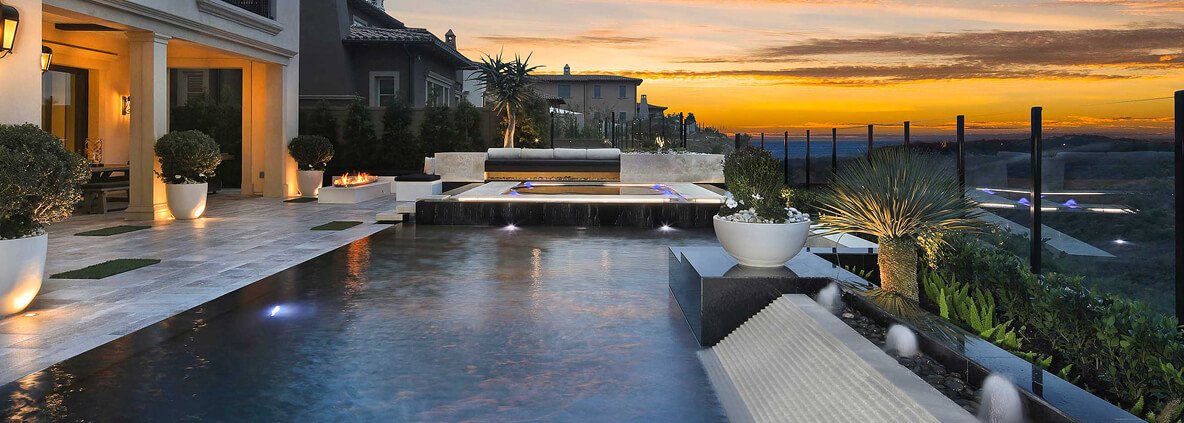
Plunge pools offer a compact way to bring water into a home. They suit smaller yards, courtyards, and rooftop terraces. However, small size does not mean simple construction. Luxury residential pool construction for plunge pools involves careful design, strong waterproofing, and high-quality finishes. This article outlines what owners should know before they start.
Key Takeaways
- Plunge pools usually cover 6 to 15 square meters and reach depths of 1.2 to 1.5 meters.
- Compact designs fit courtyards, terraces, and narrow side gardens.
- Owners use them mainly for cooling off, relaxing, and light exercise.
- Heating or cooling systems expand how often the pool gets used.
- Engineering and waterproofing matter just as much as they do in larger pools.
- Premium materials and lighting create a refined look in a small footprint.
- Permit requirements still apply, so early checks protect the schedule.
What a Plunge Pool Offers
A plunge pool works as a small, deep basin for soaking and cooling down. Owners do not swim laps in it. Instead, they sit on a bench, float, or take a quick dip after the sun or sauna.
Because of its size, the pool uses less water and less energy than a full-size model. In addition, it takes up little room, which makes it attractive for city homes. The result is a luxury feature without a large footprint.
Ideal Locations and Layouts
Plunge pools adapt to many settings. Courtyards, entertaining decks, and garden nooks all work well. Moreover, builders can install them on upper levels when the structure allows.
Layout planning should respect access, sightlines, and privacy. For example, a pool beside a bedroom suite or a living area encourages daily use. Therefore, designers often place the pool where owners naturally gather.
Common Shapes and Design Features
Rectangular shapes dominate, since they match modern architecture. Round or organic forms suit gardens with softer lines. Either style can look elegant when proportions feel balanced.
Popular features include:
- Built-in benches for seating and conversation.
- Spillways or water walls that add sound and movement.
- Spa jets for hydrotherapy.
- Fiber-optic or LED lighting for evening ambience.
- Tiled steps and shallow shelves for easy entry.
Each option should serve a clear purpose in a limited space.
Structural Engineering in Compact Pools
A smaller pool still needs a strong shell. Reinforced concrete, steel framing, or prefabricated composite units can all work. However, soil conditions, groundwater, and nearby buildings influence the right choice.
On upper floors, engineers check load limits carefully. Water weighs about one tonne per cubic meter, so even a small pool adds significant load. Accordingly, builders coordinate with structural engineers before they finalize the design.
Waterproofing and Finishes
Good waterproofing protects both the pool and the home around it. Builders apply membranes to the shell, joints, and penetrations. Furthermore, they test for leaks before they add tiles or stone.
Finishes shape the character of the pool. Glass mosaic, porcelain, and natural stone all suit premium projects. In particular, dark interiors can create a reflective, calm surface, whereas lighter tones produce a bright, resort-style look.
Heating, Cooling, and Equipment
Compact pools respond quickly to temperature changes. A small heat pump can warm the water in a short time. Likewise, a chiller or shade structure can keep it cool during hot spells.
Equipment rooms often need to stay discreet. Consequently, builders may hide pumps and filters in a cabinet, under decking, or in a nearby shed. Quiet, efficient units help the space feel peaceful.
Safety, Permits, and Planning Rules
Plunge pools still fall under local pool regulations in most areas. Councils often require a building permit and a compliant safety barrier. In addition, setback and drainage rules may apply near property lines.
Owners should check requirements before they commit to a design. Not only does early planning prevent delays, but it also avoids costly changes. A builder with local experience can prepare documents and guide the approval process.
Budget and Builder Selection
Plunge pools cost less than large pools, yet premium finishes and equipment can raise the price quickly. Owners should request itemized quotes that separate excavation, shell, finishes, and equipment. In other words, each line should show where the money goes.
Ask builders about completed compact projects, warranty terms, and aftercare. Visiting a finished pool reveals workmanship that photos cannot show. A clear contract and open communication keep the project running smoothly.


